Lumbini, Nepal: A Complete Travel Guide to the Birthplace of Gautam Buddha
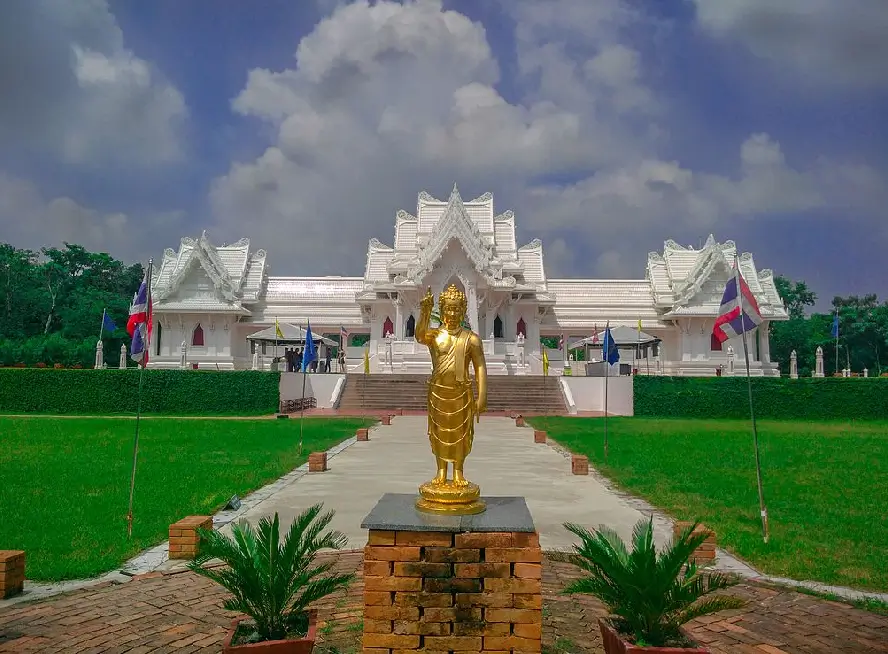
The birthplace of the founder of Buddhism and the enlightened one - Gautam Buddha, Lumbini is the among most revered destinations for the followers of Buddhism. The place is now a significant pilgrimage centre and houses many monasteries, temples, and spiritual places.
Lumbini sits on the flat Terai plains of Nepal's Rupandehi District, 22 kilometres from the town of Bhairahawa and a short distance from the Indian border, and there is nothing visually dramatic about the landscape – no mountain backdrop, no river gorge, and no ancient skyline.
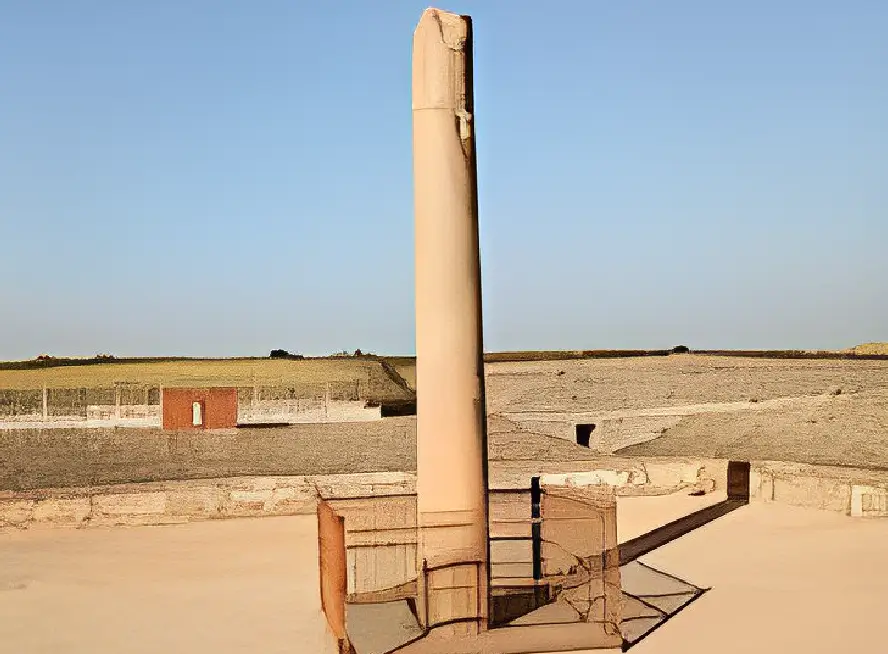
What makes Lumbini one of the most important pieces of ground on Earth is a single, archaeologically verified fact: this is the birthplace of Siddhartha Gautama, the prince who became the Buddha. The evidence is a six-metre Ashoka Pillar whose Brahmi-script inscription has survived 23 centuries in situ, a marker stone excavated beneath the temple floor in 1996 that pinpoints the birth spot, and a 4th-century sandstone nativity relief that depicts the moment itself. For anyone visiting Lumbini in Nepal, the experience is not one of scenery but of standing at a point where faith and archaeology converge with unusual directness.
History of Lumbini
The history of Lumbini begins with an event whose traditional date is 623 BCE, though most modern scholarship places it closer to the mid-6th or early 5th century BCE. According to Buddhist tradition, Queen Maya Devi, travelling from the Shakya capital at Kapilavastu to her parental home at Devadaha, stopped to rest in the sal grove at Lumbini. Holding onto a branch of a sal tree, she gave birth to Prince Siddhartha, who, tradition holds, took seven steps and declared his final rebirth.
The site entered the historical record in 249 BCE, when the Mauryan emperor Ashoka made a pilgrimage to Lumbini and erected a polished sandstone pillar. The inscription, in Brahmi script and Pali language, records that "twenty years after his coronation" Ashoka visited the spot where the Buddha was born, installed a stone marker and railing, and exempted the village from tax, reducing its grain contribution to one-eighth of the produce. That inscription, still legible today, remains one of the earliest verified references to the Buddha's life, and it is the oldest known inscription in Nepal.
Over the following centuries, Lumbini was visited and described by Chinese pilgrims, notably Fa-Xian in the 5th century and Xuanzang in the 7th century, both of whom recorded the Ashoka Pillar, the temple, and surrounding monasteries. After the decline of Buddhism in the Indian subcontinent, the site gradually fell into obscurity and was lost to the jungle.
In December 1896, the Nepalese military governor General Khadga Shamsher Rana, assisted by German archaeologist Alois Anton Fuhrer, rediscovered the buried pillar and confirmed the site's identity beyond doubt. Further excavations by P.C. Mukherji in 1899 uncovered the main part of the Nativity sculpture, a red sandstone relief attributed to the 4th-century Mathura school of art, depicting Maya Devi holding the tree branch as attendants support her and celestial figures receive the newborn. Kaiser Shumsher reconstructed the temple mound in 1939, and the present Maya Devi Temple was rebuilt and reopened by the Lumbini Development Trust in 2003.
Most recently, in 2013, a team of archaeologists from Durham University and the Lumbini Development Trust excavated beneath the temple and discovered the remains of a timber shrine dated to the 6th century BCE, potentially the oldest Buddhist structure yet identified anywhere in the world. The discovery suggests that ritual activity at the site may predate all previously known Buddhist architecture by several centuries.
A UNESCO World Heritage Site
Lumbini was inscribed as a UNESCO World Heritage Site in 1997, under criteria (iii) and (vi), recognising both the archaeological evidence confirming the Buddha's birthplace and the remains of Buddhist viharas and stupas spanning the 3rd century BCE to the 15th century CE. The inscribed property covers a compact area of roughly 1.95 hectares around the principal archaeological remains, with a 22.78-hectare buffer zone encompassing the Sacred Garden.
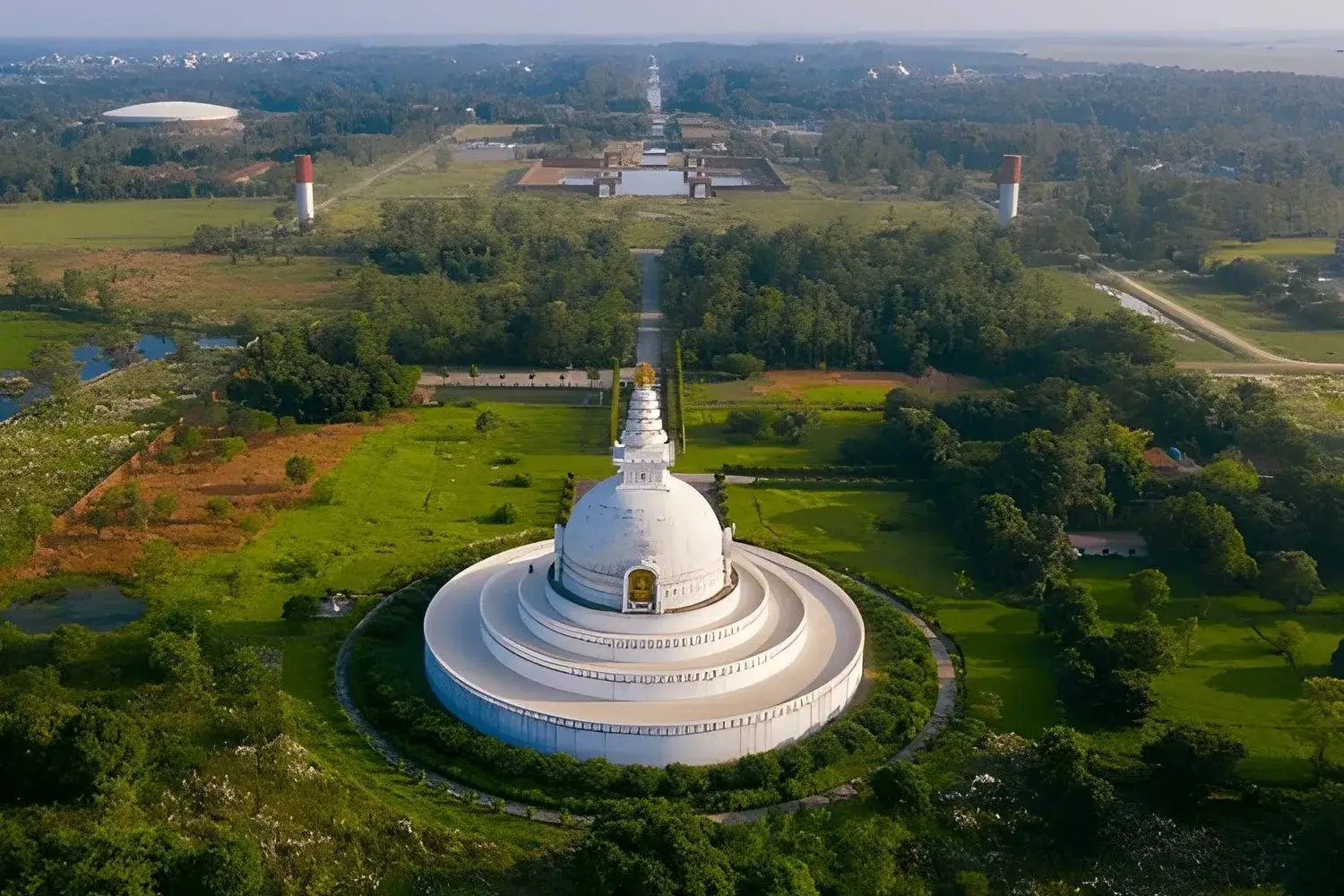
The wider site follows a master plan designed by the Japanese architect Kenzo Tange in 1978, covering a five-by-five-mile area organised along a north-south processional axis leading to the Ashoka Pillar. The plan divides Lumbini into three zones: the Sacred Garden at the southern end, containing the Maya Devi Temple, the pillar, the marker stone, and the Puskarini Pond; the Monastic Zone in the middle, split between an eastern Theravada section and a western Mahayana section; and a New Lumbini Village to the north, supporting visitor infrastructure, accommodation, and cultural facilities. The Lumbini Development Trust, established by the Government of Nepal, oversees the implementation.
Why Lumbini is One of the Most Sacred Buddhist Pilgrimage Sites in the World
Of the four principal sites associated with the Buddha's earthly life, Lumbini marks the beginning. Bodh Gaya commemorates his enlightenment. Sarnath is where he delivered his first teaching. Kushinagar is where he attained parinirvana. Lumbini is the birthplace of Siddhartha Gautama, and it is the only one of the four that holds a verified Ashoka-era inscription naming it as such, carved in stone two centuries after the event. That is why Lumbini is one of the most sacred Buddhist pilgrimage sites in the world: it is not a later monument built to honor a tradition but the actual ground, confirmed by epigraphy, where the tradition's founder was born. For practicing Buddhists across all three major vehicles, a pilgrimage to Lumbini is considered among the most important acts of devotion a person can undertake in a lifetime.
Top Tourist Places in Lumbini
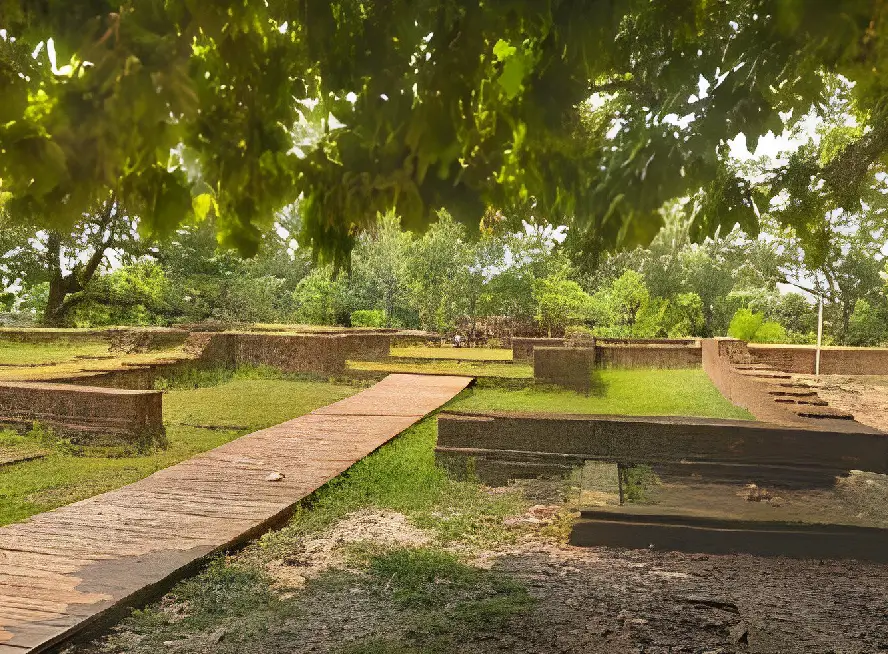
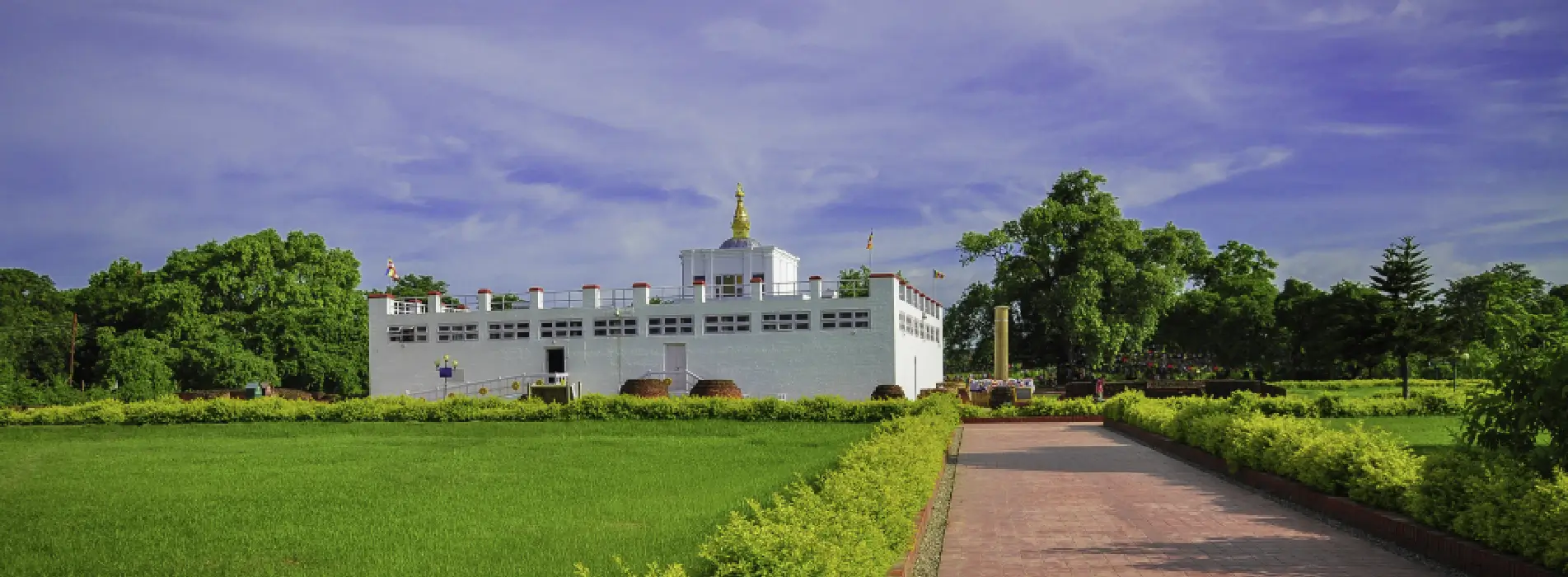
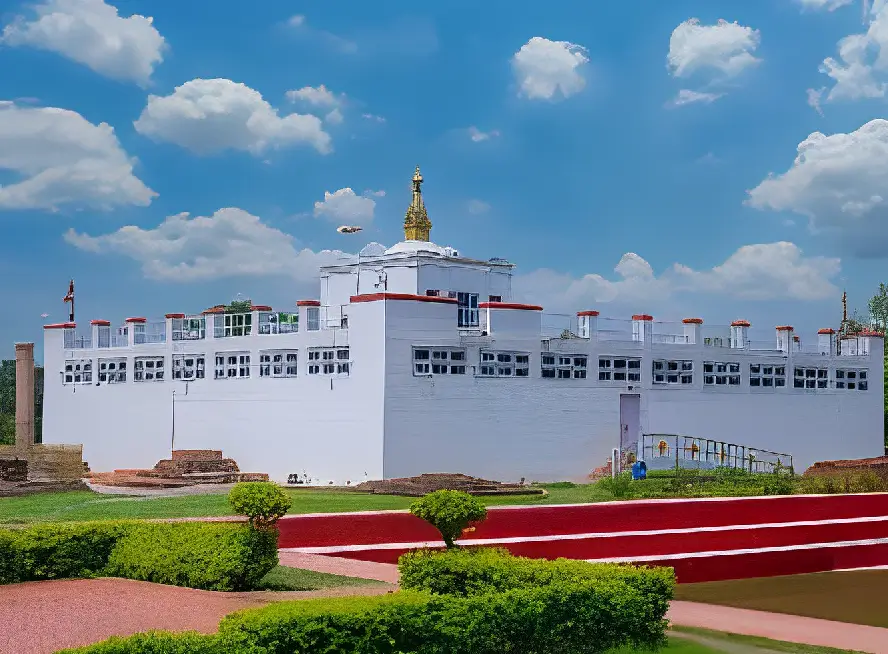
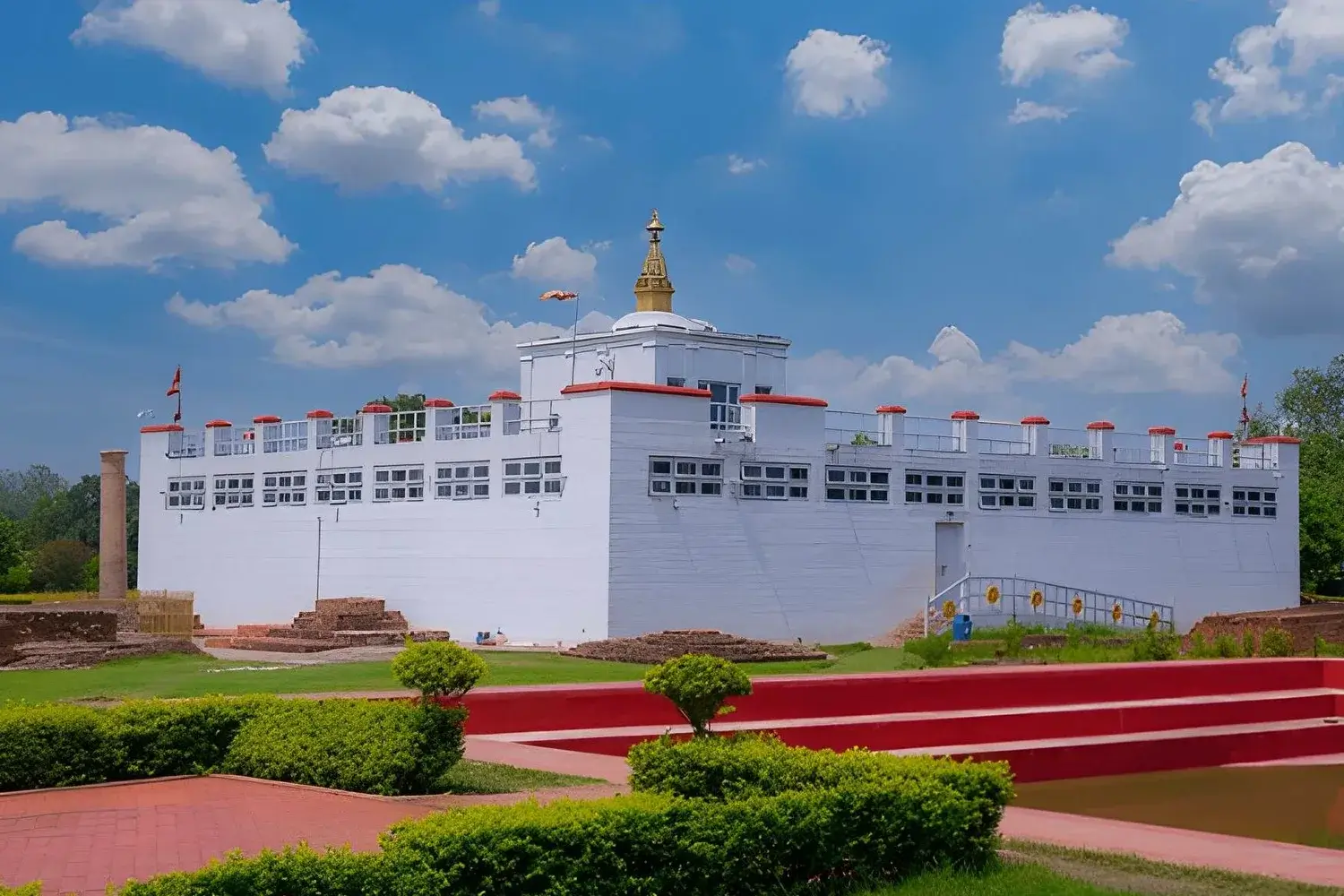
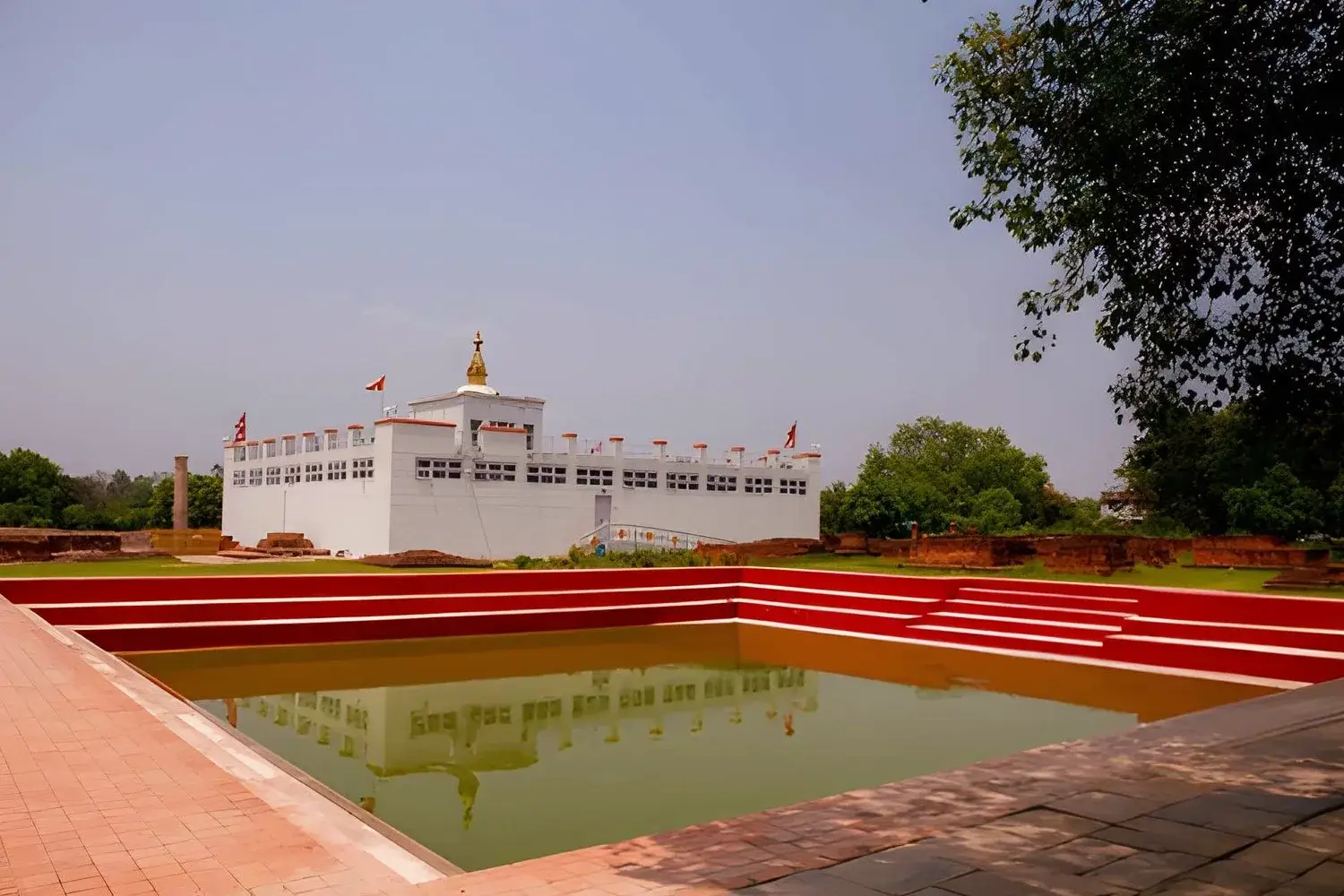
- Among the top tourist places in Lumbini, the Maya Devi Temple is the centrepiece. The current structure, rebuilt in 2003, is designed as a protective shell over the excavated ruins. Visitors look down through viewing platforms at the exposed brick foundations, the Marker Stone (a sandstone conglomerate measuring 70 cm by 40 cm, discovered during the 1992–96 excavation), and the Nativity Sculpture in the temple's sanctum. Photography is not permitted inside the temple.
- Immediately outside, the Ashoka Pillar stands in its original position, and the Puskarini Pond, where tradition holds Maya Devi bathed before the birth, lies a few steps to the south. The Sacred Garden surrounding these remains is shaded by a large Bodhi tree draped in prayer flags, where monks and pilgrims gather in the early morning.
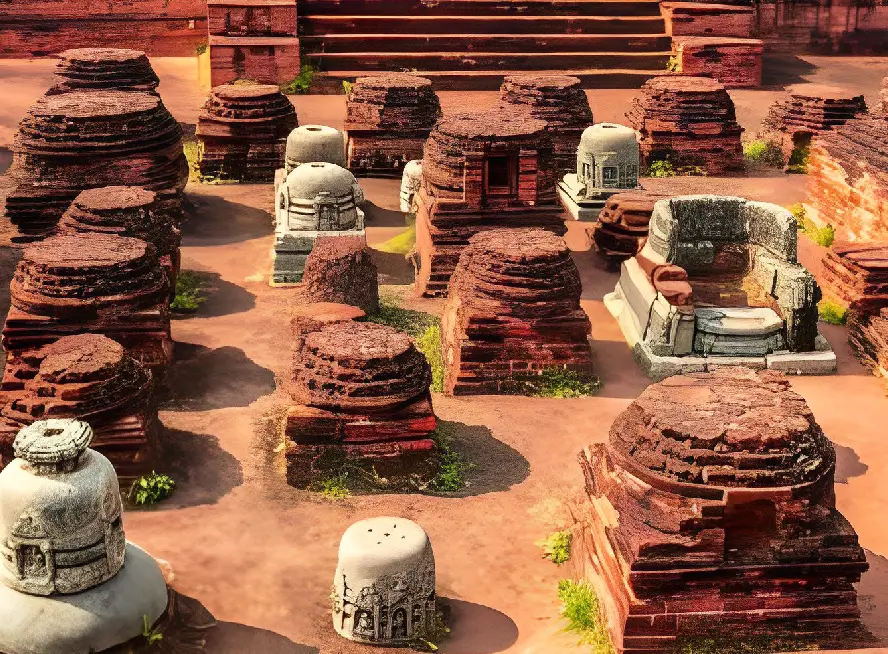
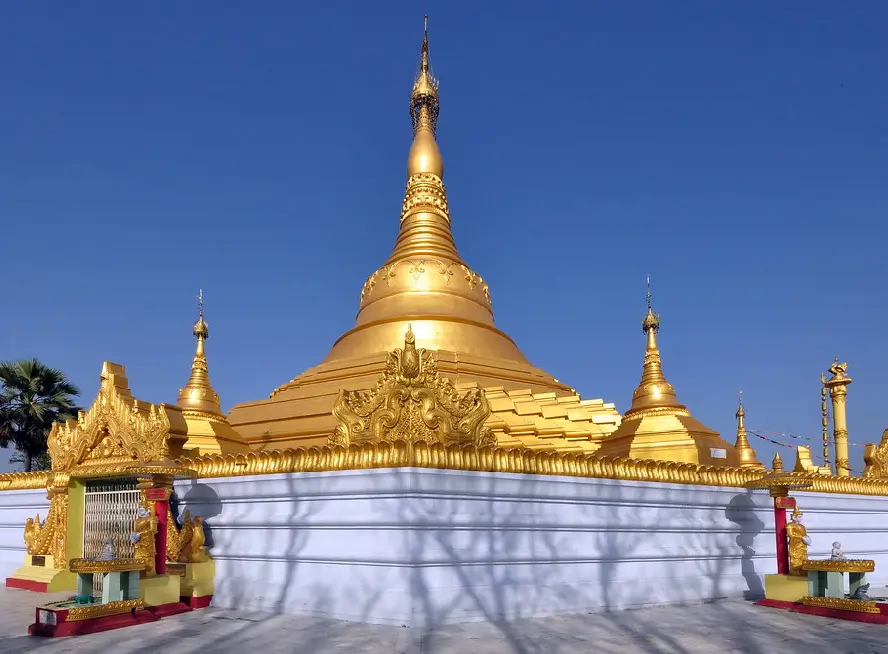
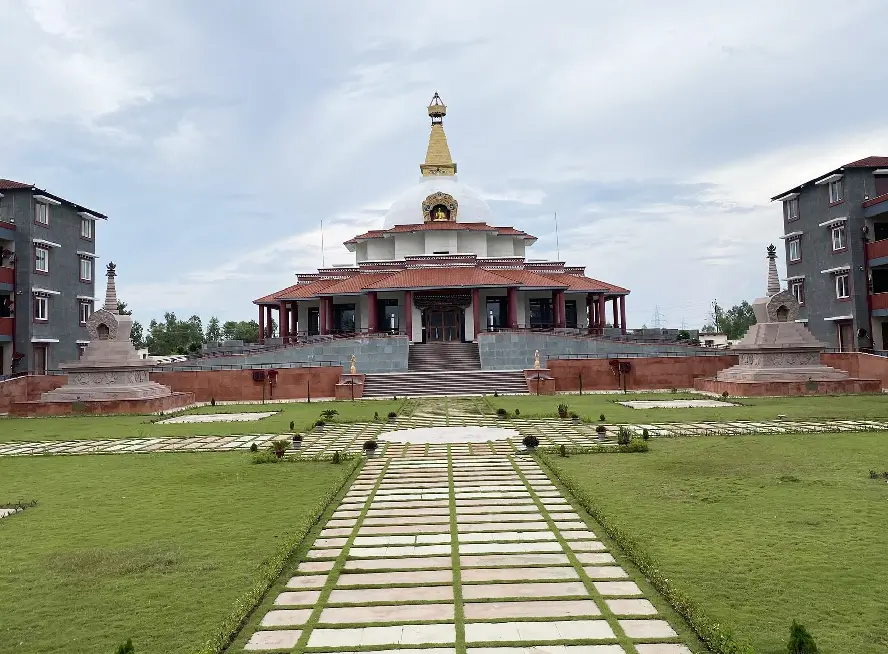
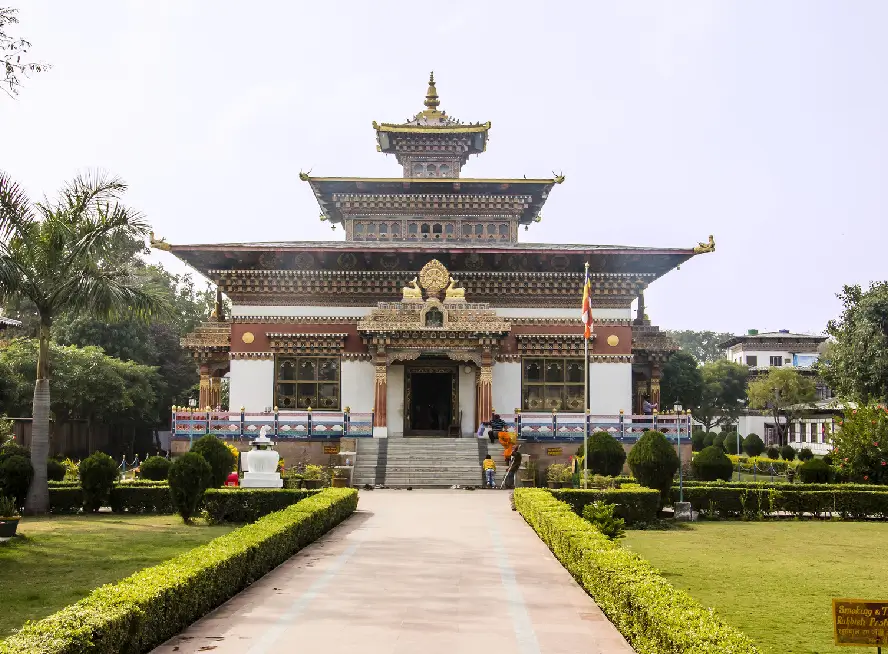
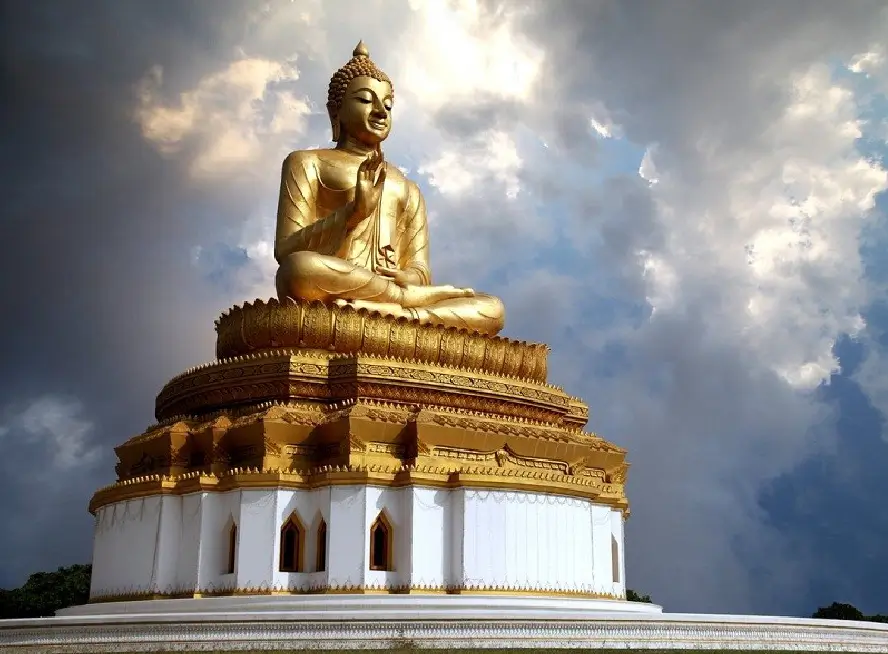
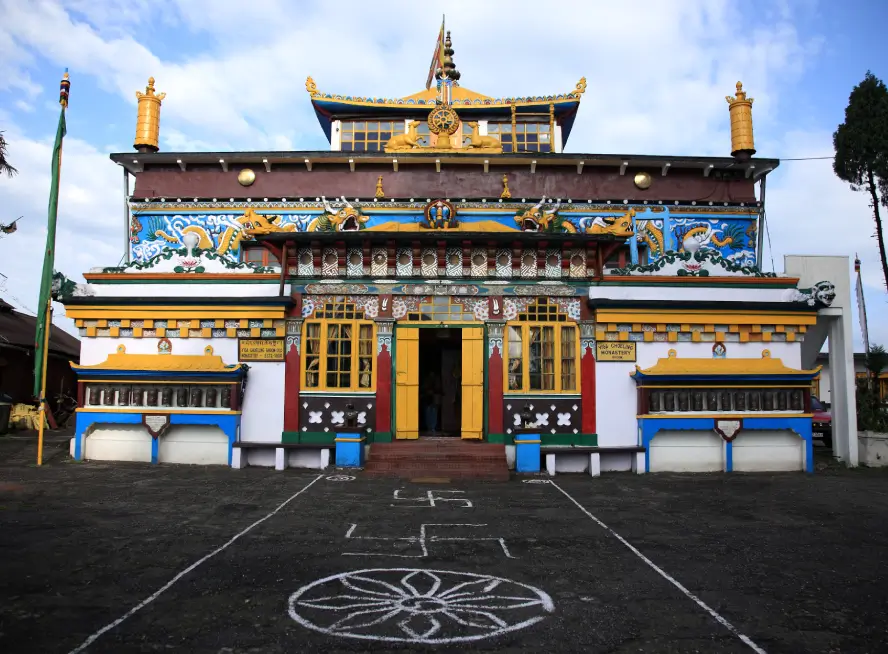
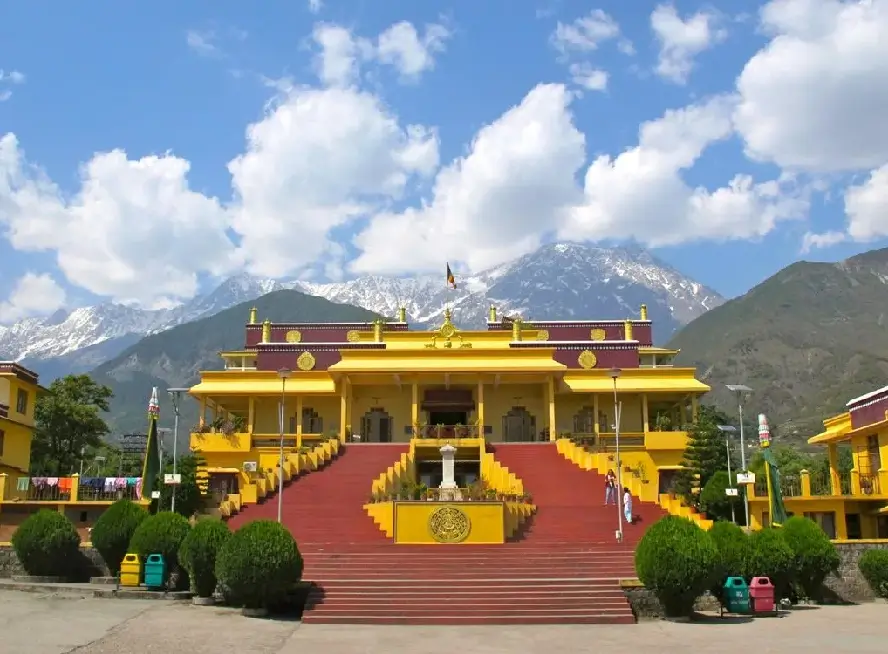
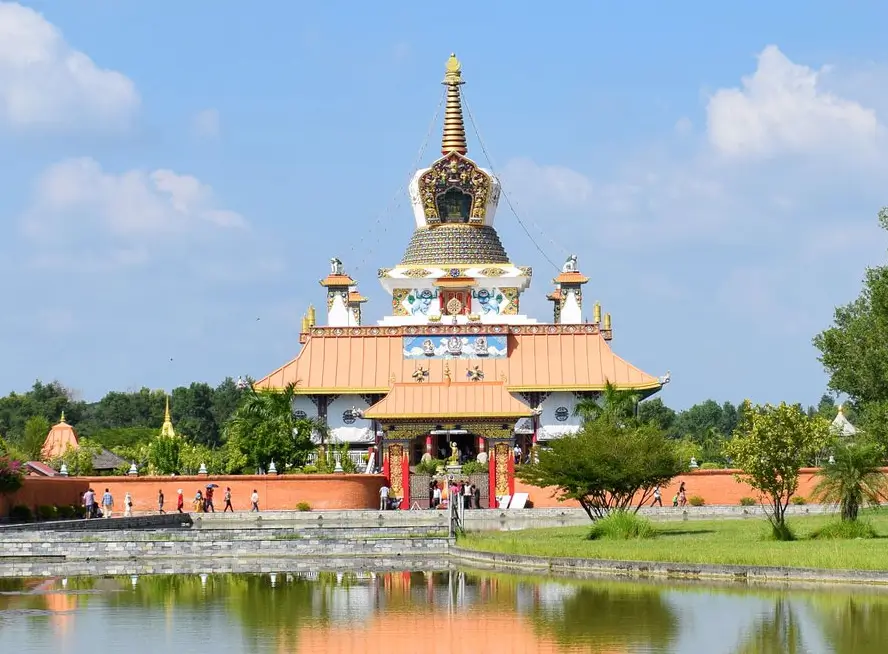
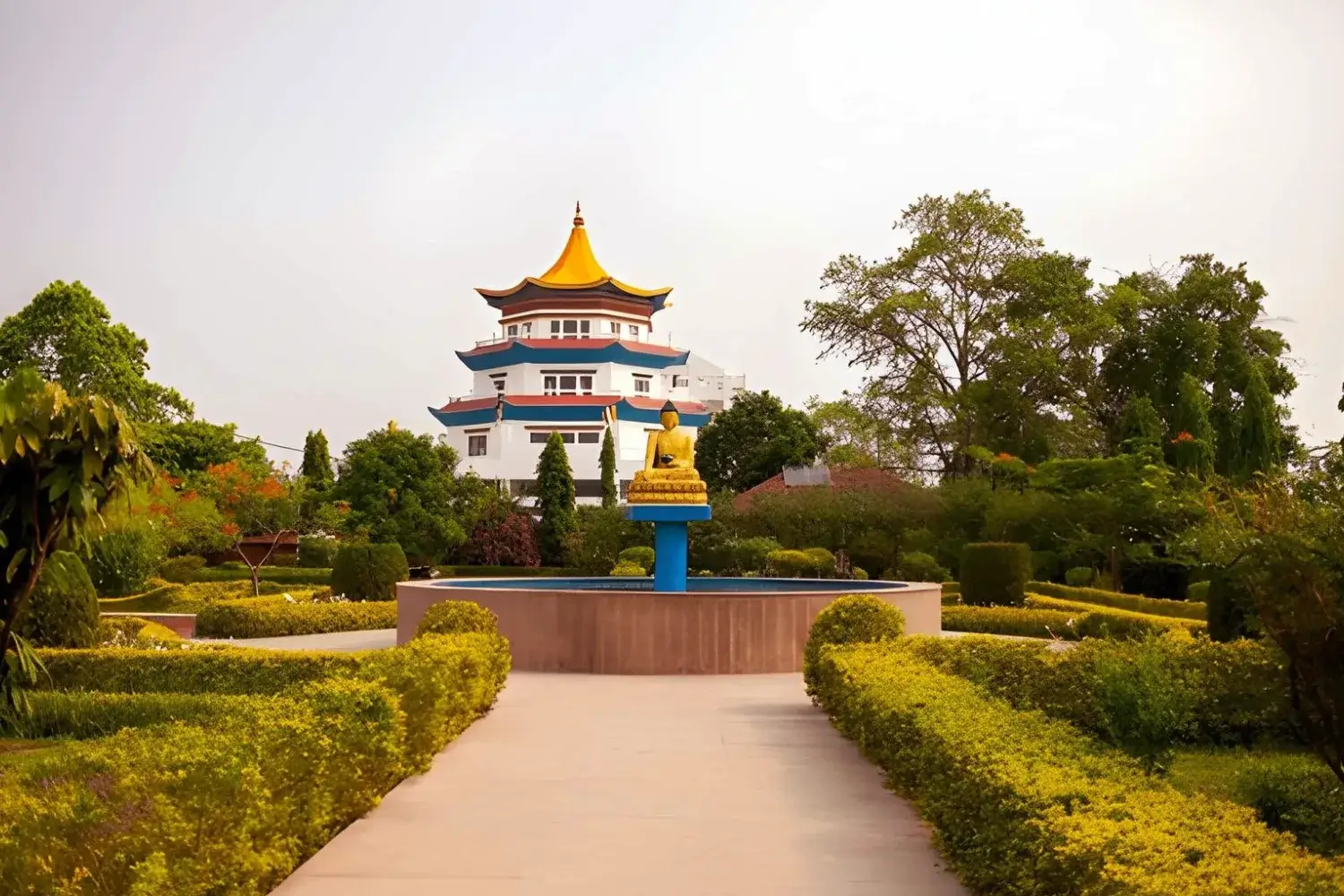
- The Monastic Zone, stretching north along the Tange-designed canal, contains more than 25 monasteries built by Buddhist communities from across the world, including Myanmar, Thailand, Sri Lanka, China, Vietnam, Cambodia, South Korea, Germany, France, and Austria. Each reflects the architectural traditions of its home country, and the contrast between, say, the gilded Thai pagoda and the austere German meditation centre makes a slow walk through the zone an education in how a single tradition has expressed itself across cultures.
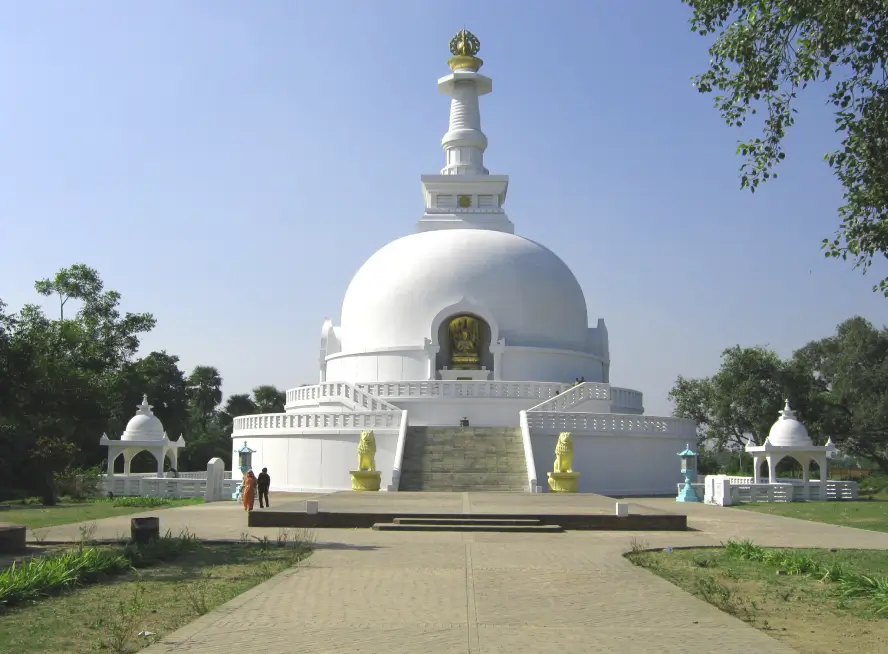
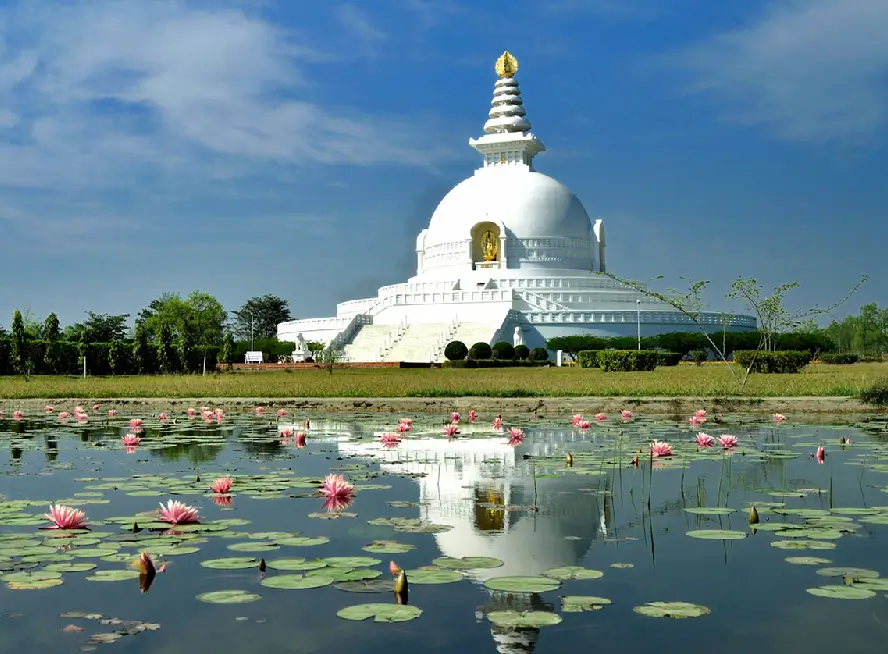
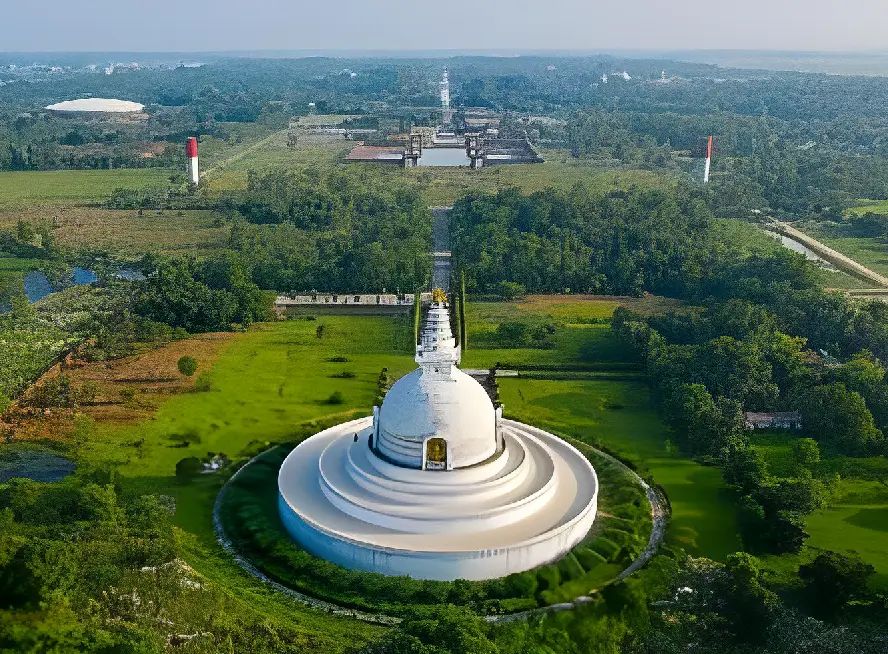
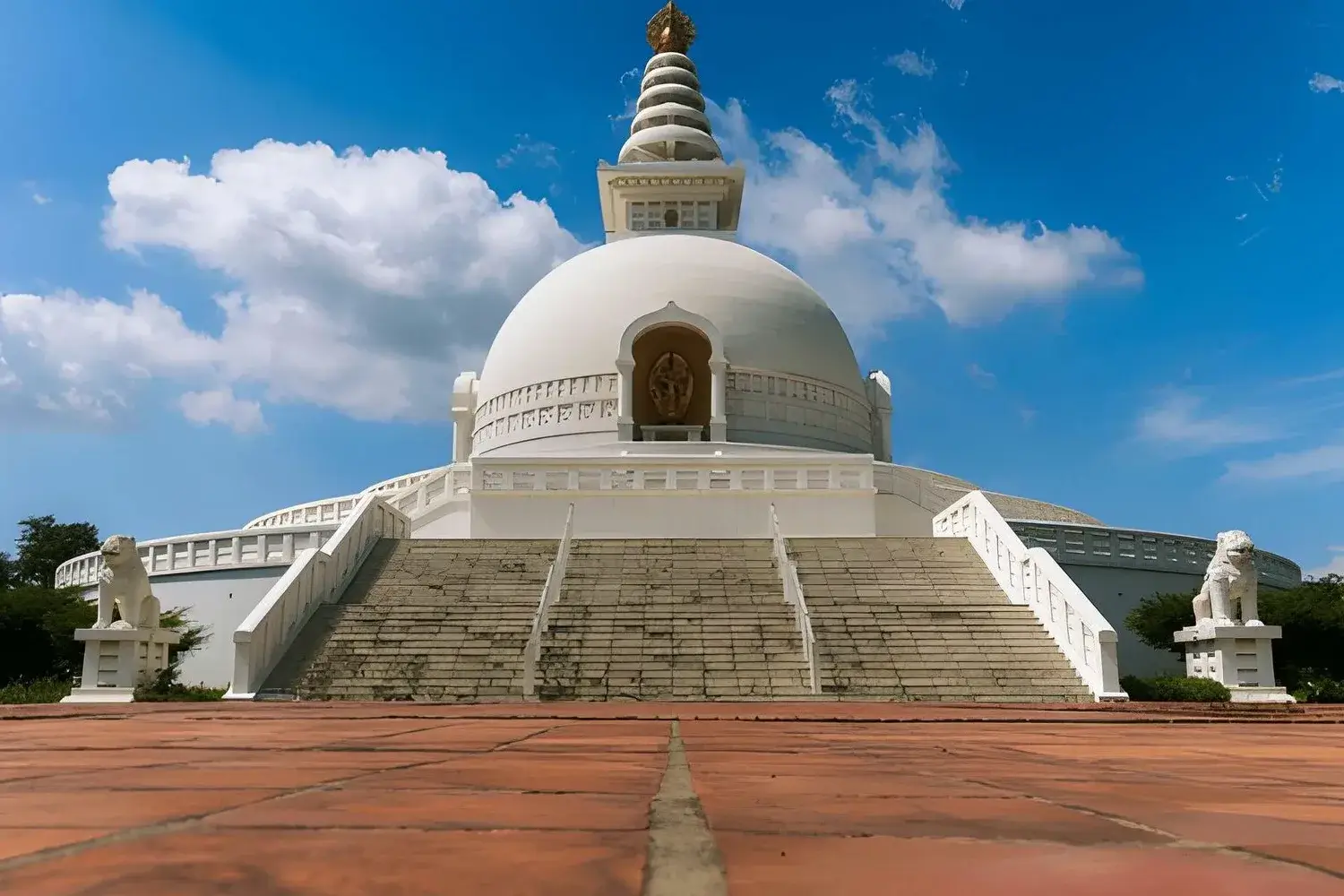
- At the northern end of the canal stands the World Peace Pagoda, built by the Japanese Buddhist order Nipponzan Myohoji. The white stupa is best visited in the late afternoon, when the light softens and the view back down the canal toward the Sacred Garden is at its most atmospheric.
Best Things to Do in Lumbini
- Walk or cycle the three-kilometre canal path through the Monastic Zone; motorised vehicles are restricted inside the core area, and the silence is part of the experience. Hire an electric rickshaw if you prefer not to walk.
- Sit in the Sacred Garden during sunrise, when the grounds are emptiest and the monks' morning chanting carries across the pond.
- Visit the Lumbini Museum, managed by the Lumbini Development Trust, for archaeological context on the site's successive construction phases and the broader spread of Buddhism across Asia.
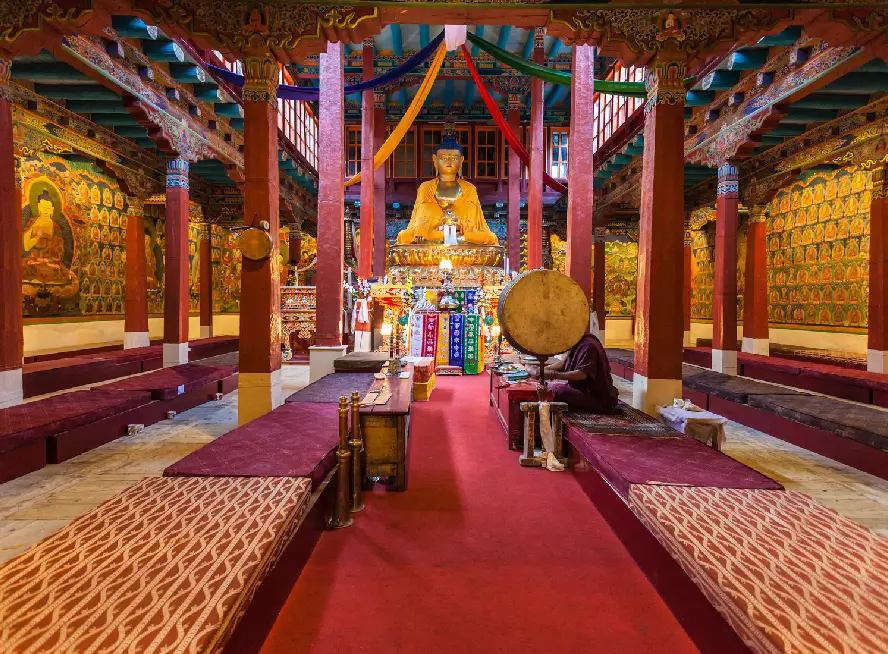
- Spend time at individual monasteries that open their halls to visitors; the Myanmar Golden Monastery and the Royal Thai Monastery are among the most ornate, while the Cambodian, Vietnamese, and Sri Lankan buildings each reward a look.
- Walk the full circuit of the Sacred Garden slowly, turning the prayer wheels that line the paths; this is not a heritage park to be ticked off in an hour.
Best Time to Visit Lumbini
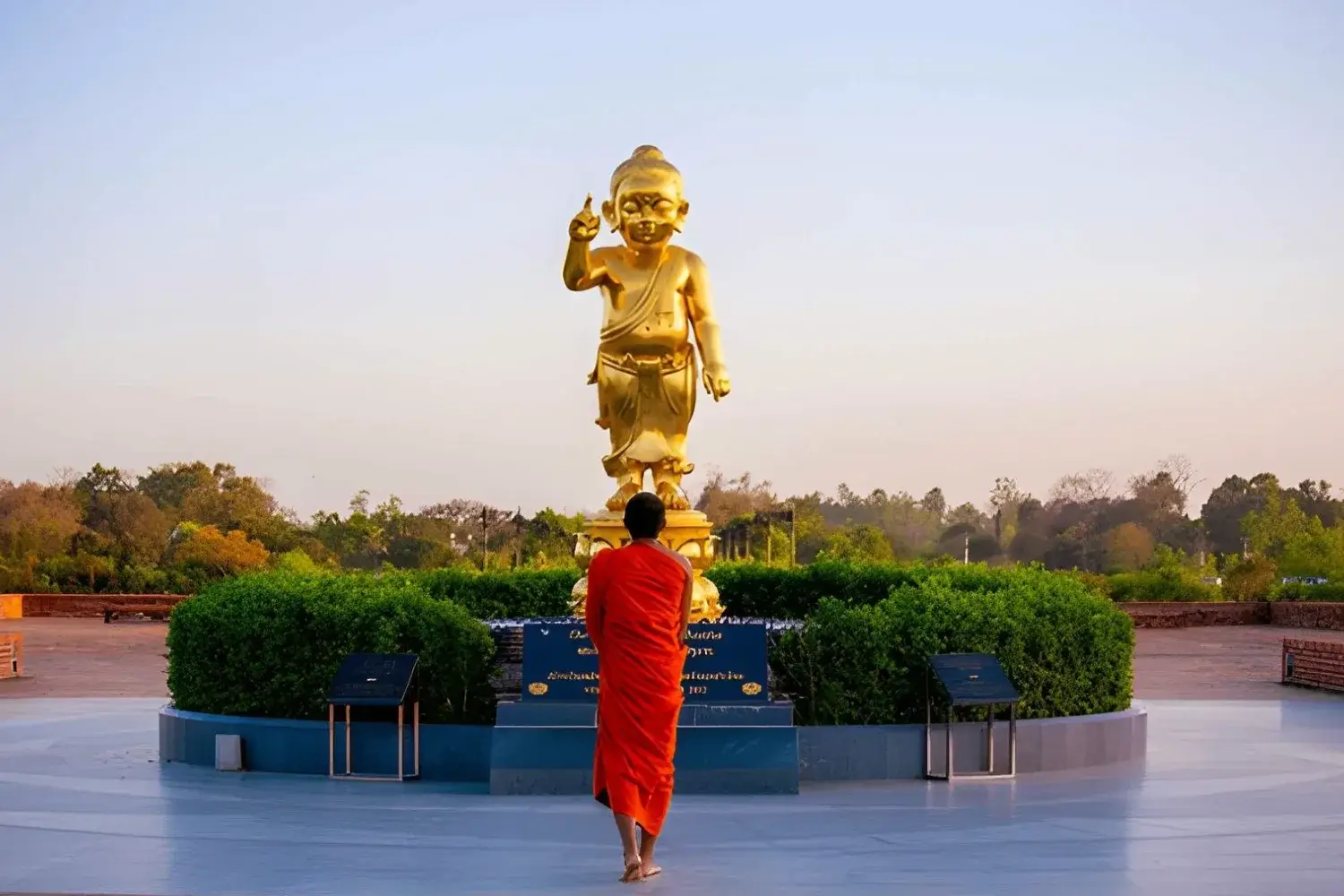
The best time to visit Lumbini is from October to March, when Terai daytime temperatures settle into the low to mid-twenties (Celsius) and skies are reliably clear.
December and January mornings can be cool and misty, and the fog lifting over the Sacred Garden at sunrise is one of the site's most atmospheric moments.
April through June bring extreme heat, regularly exceeding 40 degrees on the open plains, and sustained outdoor walking becomes difficult.
The monsoon, from July to September, brings heavy rainfall that can flood low-lying paths and disrupt road connections from the Indian border.
Buddha Jayanti (Vesak), typically in May, draws large pilgrimage crowds and special ceremonies to the Sacred Garden, but the heat is punishing for unacclimatized visitors.
How to Reach Lumbini?

- By Air
Gautam Buddha International Airport at Bhairahawa (airport code BWA), about 22 kilometres from the Sacred Garden, became Nepal's second international airport in May 2022. International service has been inconsistent since its inauguration; as of mid-2026, Thai AirAsia operates pilgrim-orientated flights, and the airport is actively working to attract additional carriers, but schedules remain limited. Domestic flights from Kathmandu (roughly 45 minutes) are more reliable and are the quickest option for visitors flying into Nepal's capital first.
- By Road
From Kathmandu, Lumbini is roughly 280 kilometres by road, a journey of seven to eight hours via the Prithvi and Siddhartha Highways. The road is well maintained by Nepali standards, and the drive passes through the Himalayan foothills before descending to the Terai. From the Indian side, the Sunauli-Belahiya border crossing connects directly; taxis and buses run from both sides of the border to Bhairahawa and on to Lumbini, making it straightforward to fold the site into a broader Buddhist circuit tour through northern India.
- By Train
There is no railway at Lumbini. Travellers relying on rail typically arrive at Gorakhpur Junction in Uttar Pradesh, one of northern India's major railway hubs with connections to Delhi, Kolkata, Varanasi, and Lucknow. From Gorakhpur, the Sunauli border is roughly three hours by road, and Lumbini is another 30 to 40 minutes beyond the crossing. Nautanwa, a smaller railhead closer to the border, is an alternative if you are connecting from eastern Uttar Pradesh.
Where to Stay in Lumbini?
Accommodation is modest compared to major tourist centres but adequate for the visit. The best hotels and monastery guesthouses cluster in three locations: inside the Lumbini Development Zone itself, in nearby Lumbini Bazaar, and in Bhairahawa.
Staying within the Zone, ideally at one of the monastery guesthouses operated by the Korean, Thai, or Nepali sanghas, offers early-morning access to the Sacred Garden and, in some cases, the chance to join morning prayers with the resident monks. Hotel Lumbini Garden, Hotel Ananda Inn, and Buddha Maya Garden Hotel are among the more comfortable options for travellers who want a conventional room with reliable amenities.
Bhairahawa, 22 kilometres away, has the widest selection and is the practical base for arrivals and departures via the airport, but staying closer to the site is worth the smaller room if contemplation, not just sightseeing, is the purpose.
Best Places to Visit Near Lumbini
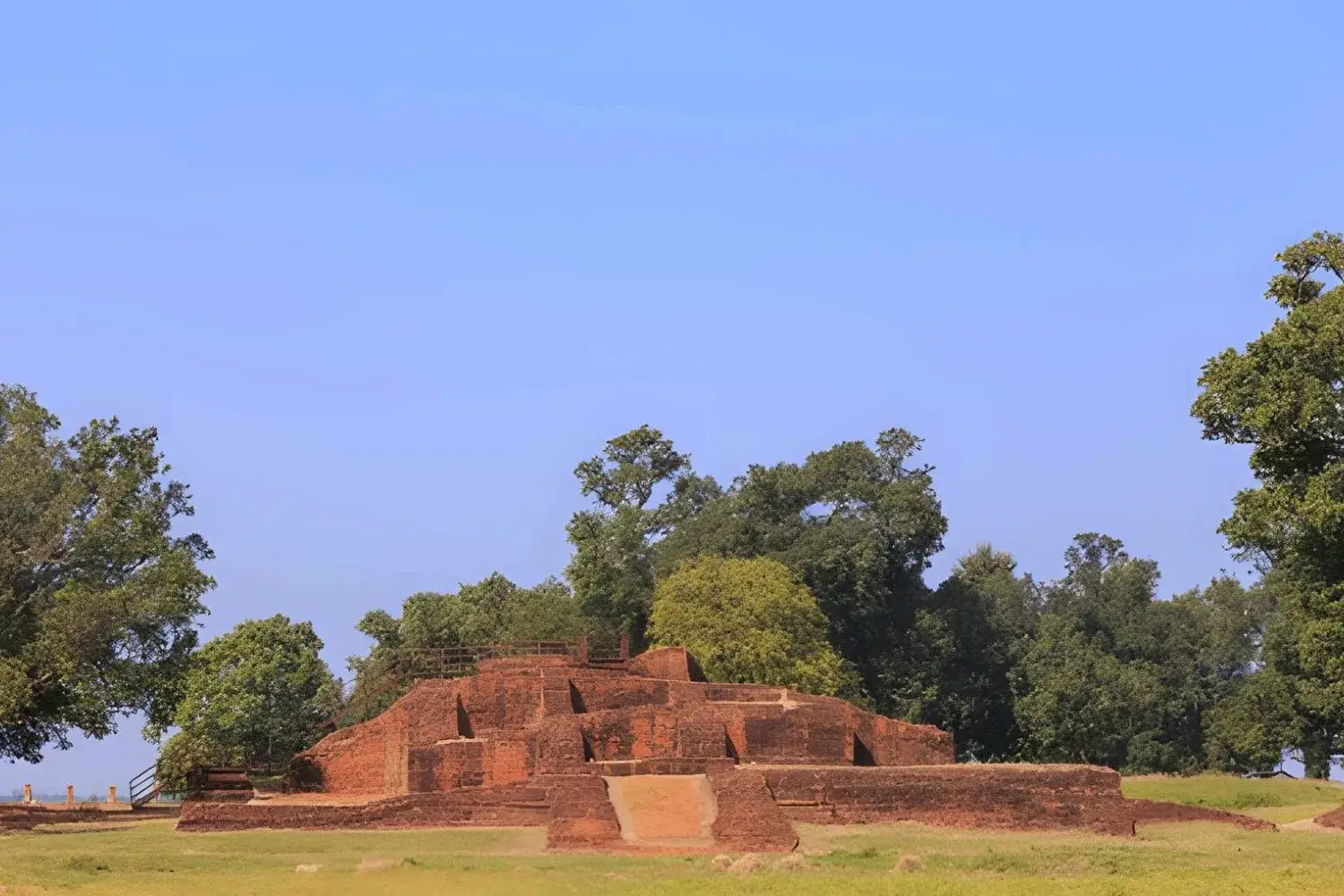
The best places to visit near Lumbini begin with Tilaurakot, believed to be the site of ancient Kapilavastu, the Shakya capital where Siddhartha Gautama spent the first 29 years of his life before renouncing royal life. The archaeological remains, about 27 kilometres west of Lumbini, include palace foundations, fortification walls, and the eastern gate through which, tradition holds, the prince departed on his great renunciation. The site is far quieter than Lumbini and receives only a fraction of its visitors, making it ideal for travellers who want a fuller picture of the Buddha's early biography without crowds. Tilaurakot and Ramagrama, the latter being the only original Ashoka-era relic stupa that was never opened, are both on Nepal's tentative list for World Heritage status.
Combined with Lumbini, these sites form the core of the Greater Lumbini Buddhist Circuit, an emerging pilgrimage route promoted by Nepal's tourism authorities. Travellers building a broader Buddhist circuit tour through Nepal can connect Lumbini with the great stupas and temples of the Kathmandu Valley, including Boudhanath, Swayambhunath, and Pharping, for a journey that covers the Terai plains and the Himalayan rim in a single itinerary.
Why Every Buddhist Should Visit Lumbini Once in a Lifetime?
There are older Buddhist sites. There are more architecturally spectacular ones. But there is only one place where a pillar erected by Emperor Ashoka records, in the emperor's own words, that the Buddha was born on that spot and where the stone that marked the birth survived beneath successive temple floors for more than two millennia until archaeologists recovered it in 1996. That convergence of textual record, physical evidence, and unbroken pilgrimage tradition is what makes Lumbini irreplaceable. It is the reason why every Buddhist should visit Lumbini once in a lifetime, and it is the reason this site, rather than any later monument, stands as the starting point of the Buddhist world.